








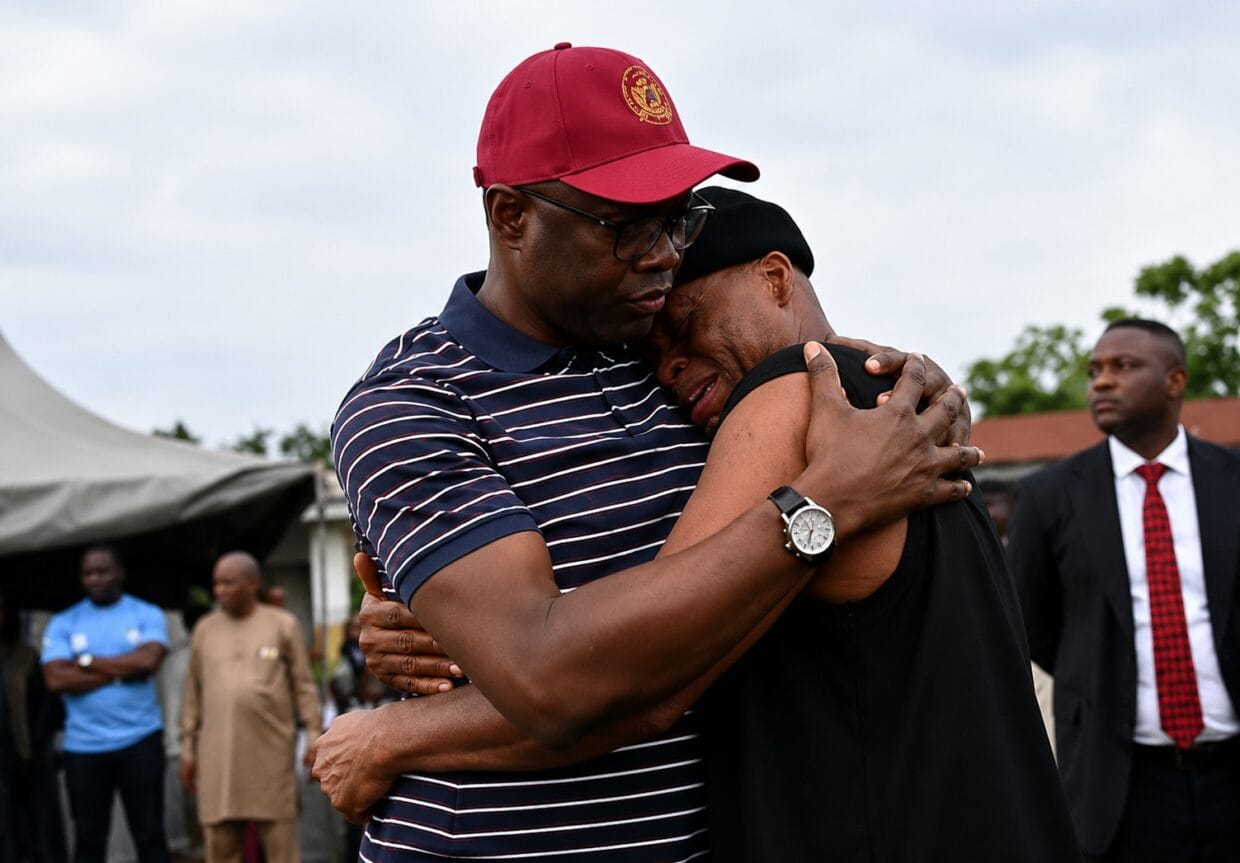
When news broke that dozens of pupils and teachers had been abducted from schools in Oyo State, many Nigerians reacted with shock and sadness. Social media was filled with prayers, outrage, and calls for action. For a few days, the story dominated conversations.
People spoke about the fear those families must be experiencing and wondered how such a thing could happen to children who had simply gone to school.
Then something familiar happened.
The conversation slowly faded.
Another story took over the headlines. Another debate captured people’s attention. The internet moved on.
But the families of those children did not.
While many of us returned to our daily routines, some parents were still waking up every morning hoping for good news. They were still making phone calls. They were still waiting. They were still living through a nightmare that no parent should ever have to experience.
That is the part of a kidnapping story that often gets forgotten.
When we see reports about abductions, it is easy to focus on the numbers. Forty victims. Twenty victims. Ten victims. The figures become statistics on a screen. Yet behind every number is a human being. Behind every child is a family. Behind every victim is a home where someone is worried, crying, praying, or refusing to give up hope.
A child is never just a headline.
A child is someone’s future.
A child is someone’s reason for waking up every morning.
A child is someone’s greatest joy.
Perhaps that is why stories like the Oyo abduction hit so hard. They force us to confront a question that most of us would rather avoid.
What if it were your child?
What if the face appearing on television belonged to your son or daughter? What if you were the one waiting for answers? What if every ringing phone made your heart race because you hoped it would bring good news?
Suddenly, the story would feel very different.
The truth is that empathy often becomes strongest when something feels personal. We naturally care more when the people involved are close to us. But that way of thinking can be dangerous. If we only care deeply when tragedy affects our own families, we risk becoming indifferent to the suffering of others.
And that is something Nigeria cannot afford.
The country has witnessed too many kidnapping stories over the years. From schoolchildren to travelers, farmers, worshippers, and entire communities, countless families have had their lives disrupted by insecurity. Each incident sparks outrage, but with time, the attention fades, and people move on.
The danger is not only the kidnappings themselves.
The danger is becoming so used to them that we stop feeling shocked.
When a society begins to treat the abduction of children as ordinary news, something important is lost. We begin to accept what should never be accepted. We begin to view tragedy as routine. We begin to lower our expectations of what life should be.
Some things should never become normal.
Children being afraid to go to school should never become normal.
Parents worrying whether their children will return home safely should never become normal.
Families living with the pain of uncertainty should never become normal.
Perhaps the biggest lesson from stories like these is that compassion should not require proximity. We should not have to imagine our own child in danger before we care about someone else’s. We should not need a personal connection before another person’s pain matters to us.
The parents of those abducted children in Oyo State are no different from parents across Nigeria. They love their children. They have dreams for themselves. They want them to be safe. They want them to come home.
And maybe that is the message we should carry with us long after the headlines disappear.
Before we scroll past the next tragic story, before we dismiss it as just another news report, we should remember that every victim is someone’s child, someone’s sibling, someone’s friend, and someone’s entire world.
Because a society is not judged only by how it responds when tragedy strikes its own doorstep. It is also judged by whether it can care when the pain belongs to someone else.
If there is one lesson from the Oyo kidnapping and countless others before it, it is this:
We should not have to wait until it is our child before we care.
Editor’s Note: The featured image has been enhanced using AI technology to improve its visual quality while preserving the original moment captured.