







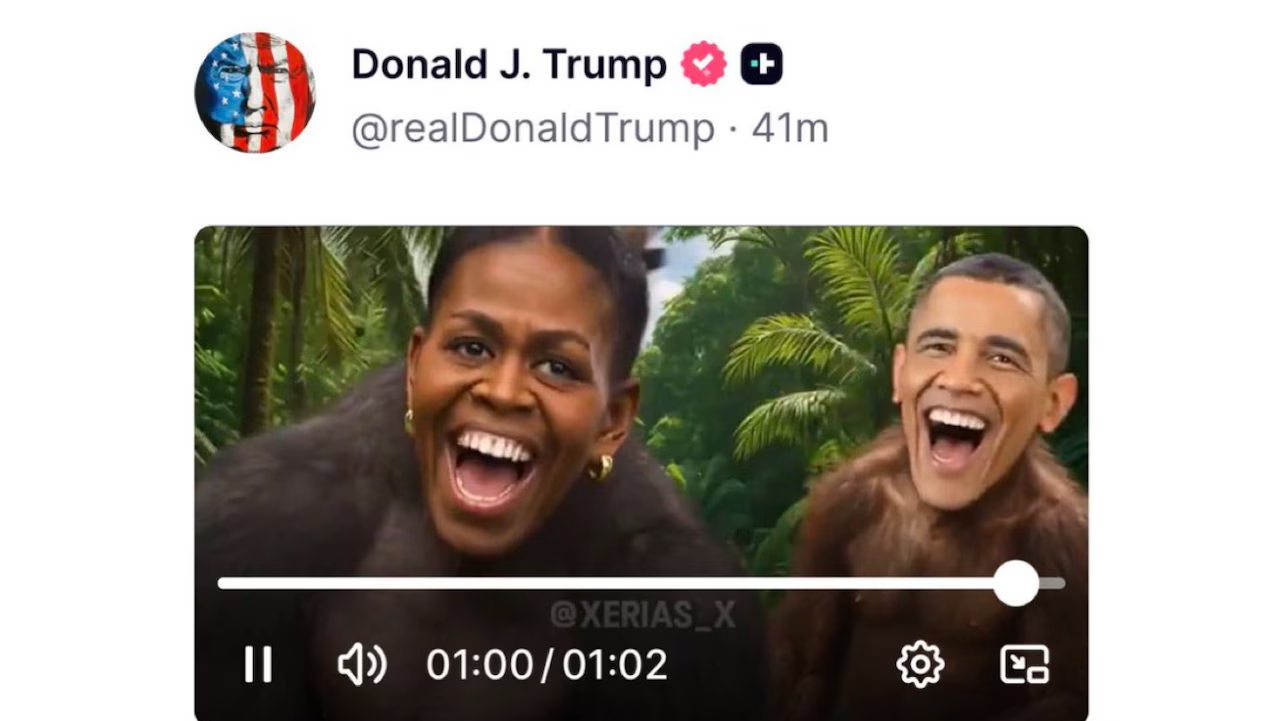
Late on February 5, 2026, a single social media post triggered national and international outrage and reopened long-standing conversations about race, power, and accountability in politics.
Former U.S. president Donald Trump reposted a video on his platform, Truth Social. The video appeared to be a compilation of political messaging and election-related claims. However, near the end of the clip, viewers noticed something far more disturbing. The imagery briefly portrayed former president Barack Obama and former first lady Michelle Obama with their faces altered onto ape-like figures.
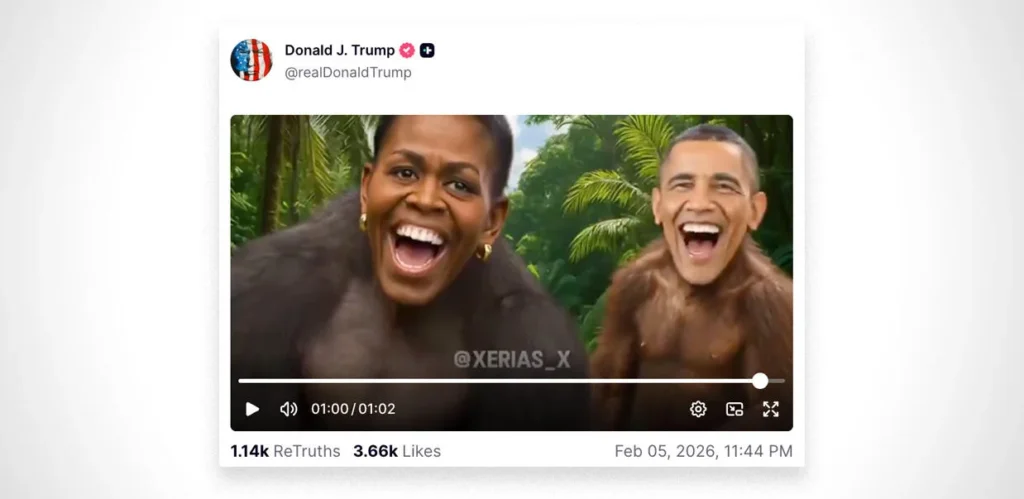
That moment quickly overshadowed everything else in the video.
The reaction was immediate. Across social media, many users described the imagery as racist and deeply offensive, pointing to the long and painful history of comparing Black people to animals as a form of dehumanization. Civil rights advocates emphasized that such imagery has historically been used to justify discrimination and violence, which is why even brief or edited depictions carry heavy weight.
Criticism did not come from just one political side. Democratic leaders condemned the post outright, while several Republicans also publicly distanced themselves from it. Some called the imagery unacceptable; others said it crossed a moral line that should never be approached, regardless of political rivalry. Civil rights organizations issued statements expressing disappointment and anger, especially given the timing during Black History Month.
Within hours of the backlash, the video was deleted from Trump’s account. Soon after, Trump addressed the controversy, saying he had not noticed the offensive portion of the video before reposting it. He stated that the post was not intended to be racist and claimed he had only focused on the earlier political content. However, he stopped short of issuing a direct apology to the Obamas or the public.
For many observers, that response felt insufficient. Critics argued that intent does not erase impact, especially when the person sharing the content is a former president with a massive audience. When someone with that level of influence amplifies harmful imagery, even briefly, the consequences travel far beyond a single post.
The incident also reignited a broader discussion about social media responsibility. In today’s digital landscape, reposting is no longer passive. Sharing content means endorsing it, even unintentionally. Public figures are increasingly judged not just by what they create, but by what they choose to amplify.
More than anything, this moment highlighted how political discourse continues to push boundaries in ways that deepen division rather than promote understanding. A few seconds of imagery managed to reopen old wounds, distract from real policy conversations, and remind many people that progress can feel fragile when leaders fail to exercise care.
In the end, the controversy served as a stark reminder that words and images carry history with them. And when that history is ignored, the fallout is rarely small.