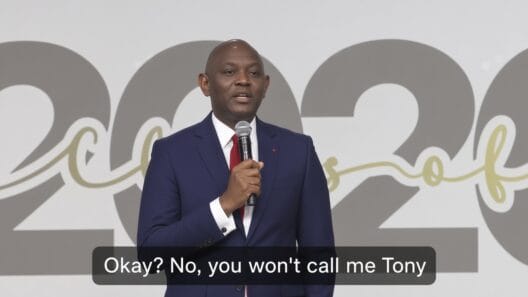








When Moniepoint CEO Tosin Eniolorunda spoke about the difficulty of finding Nigerians who meet global standards for certain roles, the internet reacted almost immediately. What may have started as a business conversation quickly turned into something much bigger. People were angry, defensive, emotional, and divided.
Speaking about recruitment challenges at Moniepoint, he said:
“We have probably 500 vacancies, and we’re struggling to find people to fill those roles. In 2024 we made a decision to hire only Nigerians, but we stopped by 2025. Not only could we not find people in the quantity and quality we needed them, but the few people that we found were not up to the global standard of quality that we needed.”
He continued:
“We were competing globally, not locally. My biggest competitors are from China. I’m competing globally; I have to make sure that I have world-class people working in the organisation. And here I am looking for Nigerians that couldn’t meet the requirements.”
But the part that truly sparked outrage online was when he said:
“I blame our education system. I used to think that Nigerians were bright, and I think we need to do something about the general IQ of Nigerians from going lower. I am really worried.”
Almost immediately, social media exploded. To many Nigerians, the statement sounded less like constructive criticism and more like an insult directed at an entire country. In a nation where unemployment remains high and opportunities already feel limited, many people took the comments personally.
But the truth is, this conversation did not become viral simply because of one CEO’s opinion. It exploded because it touched an insecurity many young Nigerians already feel.
There is a growing pressure to “make it” quickly in Nigeria today. Social media has created an environment where success is constantly displayed but rarely explained. Every day, young people scroll through luxury vacations, designer clothes, expensive cars, and unrealistic lifestyles. The pressure to succeed fast has become overwhelming. Somewhere along the line, patience, long-term growth, and skill development started losing attention to quick visibility and fast money.
This is why conversations around Yahoo culture, hookup culture, and “soft life” trends often become emotional online. Many young Nigerians are trying to survive a difficult economy while also trying not to feel left behind. So when a major CEO says there is a talent problem, some people hear more than criticism. They hear judgment.
At the same time, some Nigerians quietly agreed with parts of what he said. Across different industries, employers continue to complain about gaps in communication skills, critical thinking, professionalism, and technical ability. The education system is struggling, many people are forced to learn on their own, and the country continues to lose talented professionals to relocation opportunities abroad.
Still, many people also pointed out that companies are not completely innocent in this conversation. Nigerian workers often complain about poor salaries, unrealistic expectations, toxic work environments, and companies wanting “world-class talent” without offering world-class support. It is difficult to talk about talent gaps without also talking about the systems that shape workers in the first place.
That is why this debate feels bigger than Moniepoint itself. It reflects the frustration of a generation trying to survive, improve themselves, and stay hopeful in an environment that constantly feels exhausting. Many young Nigerians are ambitious, creative, and hardworking, but they are also tired. Tired of economic pressure. Tired of online comparison. Tired of feeling like survival is a competition.
In many ways, the reaction to the Moniepoint CEO’s statement revealed a country that is emotionally sensitive about its future. Nigerians want to believe in themselves. They want to feel respected globally. They want opportunities that match their effort. So when conversations about “lack of quality talent” happen publicly, emotions naturally rise.
Maybe the bigger question is not whether the CEO was right or wrong. Maybe the real question is why so many Nigerians immediately felt attacked by the statement in the first place.
And honestly, that conversation might be even more important.