






They Made a Mistake, But Did They Deserve to Lose Their Future?
Sometimes, a moment can be over in a few seconds, but the consequences can stay with someone for years.
That seems to be the difficult reality facing some nursing students at Madonna University after a video they made went viral online.
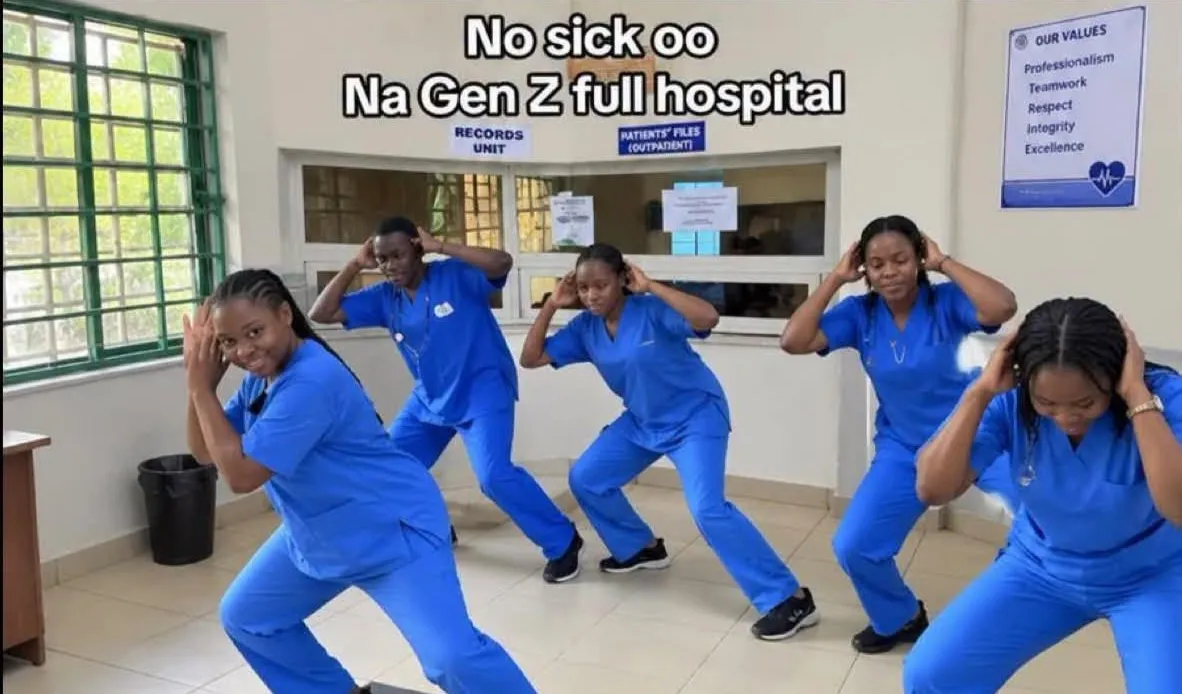
The video, which reportedly showed nursing students dancing in different parts of a hospital and clinical environment, became widely circulated across social media. It was part of the “Gen Z nurses” trend and carried the caption, “No fall sick o, na Gen Z full hospital now.”
What may have started as a fun social media trend quickly became something much bigger.
The video went viral, attracting widespread reactions from Nigerians online. Many people criticised the students for dancing in a clinical environment and questioned whether the video showed the level of professionalism expected from people training to become nurses.
And honestly, it is not difficult to understand why people were concerned.
A hospital is not simply another place to make TikTok videos. Behind those walls are people dealing with pain, fear, illness and sometimes the uncertainty of whether the next phone call will bring good or terrible news. Nursing is also a profession that requires empathy, responsibility, discipline and respect for patients.
The students were wrong to make light-hearted content in such an environment.
That should be acknowledged.
But then came the punishment, and this is where the story becomes much harder to sit with.
Reports say Madonna University expelled one of the students, identified as Mercy, while 14 other 500-level nursing students were suspended.
One student was expelled. Fourteen others were suspended.
And suddenly, this is no longer just a conversation about a viral video.
It is a conversation about the consequences of a mistake and whether those consequences should be severe enough to potentially alter the course of a young person’s entire life.
These students were reportedly in their final year of nursing school.
Think about what that means.
For years, they had studied, written examinations, attended lectures, gone through clinical training, and worked towards becoming nurses. Their families may have sacrificed financially and emotionally to get them this far. They were close to the finish line.
Then came one video.
One poor decision.
One moment of bad judgment that spread far beyond anything they could have imagined.
And now one of them has reportedly lost her place at the university.
This is where we have to ask ourselves a difficult question: Was expulsion too harsh?
There should absolutely be consequences for irresponsible behaviour. Being young does not mean being free from accountability. The students should understand why what they did was inappropriate, particularly because they were preparing to enter a profession where people’s lives and dignity are involved.
But discipline should not simply be about punishment.
Discipline is meant to build, not destroy.
The purpose of discipline should be to help someone recognise their mistake, understand its consequences and become better because of it. It should correct behaviour and, where possible, give the person an opportunity to prove that they have learned.
There were other ways to make the students take responsibility.
They could have been suspended. They could have been required to apologise. They could have undergone professional ethics training or counselling. They could have been given strict disciplinary conditions before returning to their studies.
They could have been made to understand that a hospital is not a place for careless social media content without necessarily losing years of their education.
Because punishment and destruction are not the same thing.
Sometimes, when someone makes a mistake publicly, people forget that there is a human being behind the viral video.
The internet is particularly unforgiving. A person can make one bad decision and, within hours, thousands or millions of people can have an opinion about their character. A 15-second video can become the thing people remember about you long after you have changed.
But people are capable of changing.
Young people especially are still learning. They are learning how to make decisions, how to carry responsibility, and how to understand that not every moment needs to be shared online.
A mistake does not automatically mean someone is a bad person.
A bad decision does not mean someone is incapable of becoming a good professional.
And one embarrassing moment should not necessarily become the final chapter of someone’s story.
Perhaps that is the part of this situation worth thinking about most.
The students should learn from this.
They should understand that being a nurse comes with responsibilities that go beyond passing examinations. They should understand that patients deserve dignity and that professional environments are not playgrounds for every social media trend.
But after they learn that lesson, what then?
Should there still be room for them to grow?
Should there still be room for them to become the nurses they were working towards becoming?
We believe there should be.
Accountability and compassion can exist together.
It is possible to say, “What you did was wrong,” while also saying, “You can do better.”
It is possible to discipline someone without making them feel that their entire life is over.
And perhaps this is something we should remember whenever a young person’s mistake becomes the latest viral conversation online.
Today, it is these students.
Tomorrow, it could be someone else.
We are all more than our worst decisions. Most people have moments in their past they are grateful did not define their entire lives. We have all made mistakes we would handle differently if given another opportunity.
The difference is that not every mistake we make becomes a viral video watched by thousands of strangers.
The students have a responsibility to learn from what happened.
The university has a responsibility to protect the standards of its institution and the nursing profession.
But society also has a responsibility to remember that young people need opportunities to grow.
Maybe the most meaningful punishment is one that makes you better, not one that leaves you with nothing to rebuild.
Because at the end of the day, discipline should build, not destroy.
If these students can walk away from this experience understanding the seriousness of their profession, respecting the dignity of patients and thinking more carefully about what they put online, then the lesson has served its purpose.
We should hold people accountable.
But we should also leave the door open for redemption.
Because sometimes, the person who makes the mistake at 20 is not the same person they will become at 30.
And when there is still so much life ahead of someone, perhaps there should always be room for them to become better than the mistake that once went viral.
It gets better, right? Wishing you well.